Safe Carpooling Tips for Atlanta Commuters
Carpooling with someone you met through an app might sound unusual, but daily carpools have been part of American commuting for decades — from informal slug lines in Washington DC to modern app-based matching networks. The difference today is that technology brings transparency, verification, and accountability to what was once a handshake arrangement.
This guide covers how RideHike protects you, practical safety tips for your first (and hundredth) carpool, and what to do when something doesn't feel right.
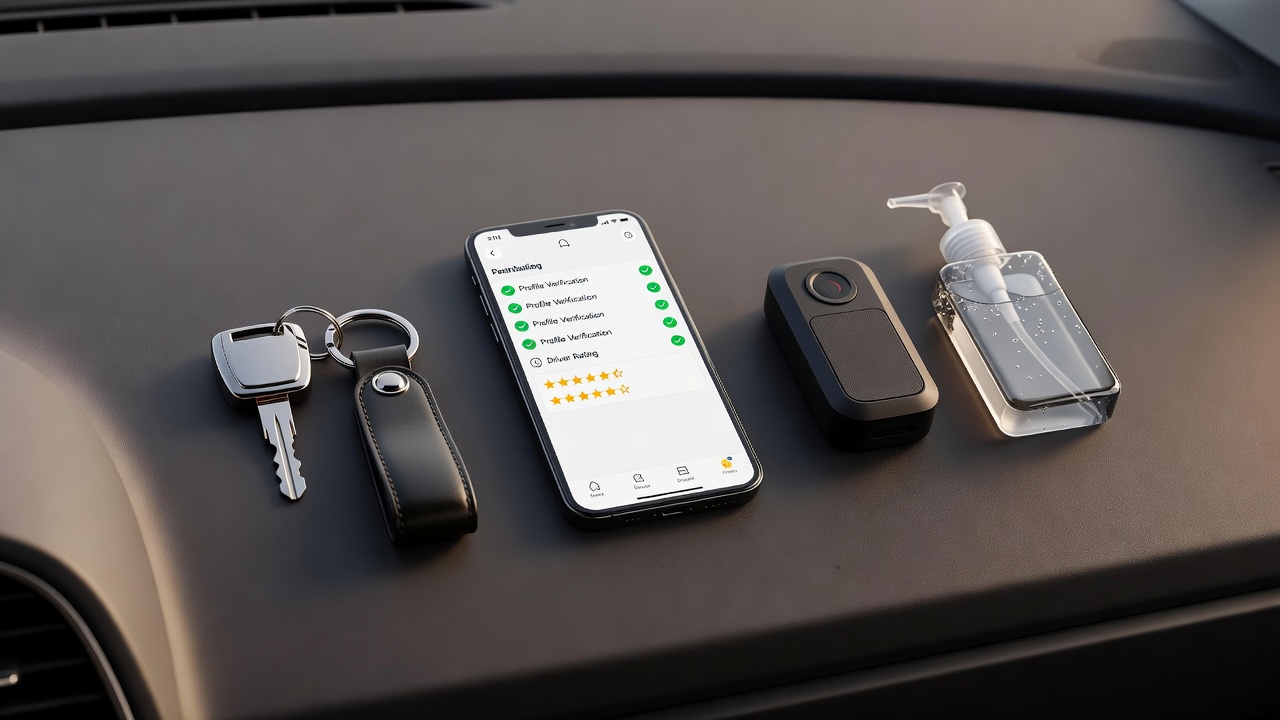
How RideHike Protects You
Before you ever get in a car with someone from RideHike, the app walks you through a Safety First checklist with five steps designed to build trust through verification — not promises.
1. Share Your Info
Before you can join a ride, you are asked to share your name and phone number with the person you'll be carpooling with. This is a safety mechanism for both parties — when both riders and drivers know each other's contact information, everyone is accountable. A confirmation dialog asks you to approve sharing your contact details before proceeding. You always see what information is being shared and with whom.
2. Verify Their Info
Once the other person has shared their information, the app shows you their full name and phone number so you can confirm you're matching with the right person. This step ensures there are no mix-ups — you know exactly who you'll be riding with before you meet.
3. Share Your Plans
The app prompts you to inform a friend or family member about your carpooling plans, including details about the person you're riding with. RideHike includes a one-tap "Send Text Now!" button that opens a pre-filled SMS with your carpool partner's name and phone — so you can text someone your plans in seconds without typing any details.
4. Meet in a Public Place
Your first meeting should be in a well-lit, public area. The checklist makes this explicit: arrange to meet somewhere visible and busy, not a residential driveway or isolated parking lot. This gives both parties a low-pressure opportunity to confirm details face-to-face.
5. Have a Video Call
Before meeting in person, consider having a quick video call. If someone refuses to do a video call, that is considered a red flag. RideHike makes it easy — tapping "Start Video Call" opens FaceTime (iOS) or a phone call (Android) directly from the checklist.
"The best carpool partners set expectations before they set a schedule. A 5-minute conversation about pickup times and cancellation policy prevents weeks of awkward commutes."
These five checklist items work alongside RideHike's core identity verification (phone verification and bank account or credit card verification on every account) to create multiple layers of trust before your first ride.
7 Safety Tips for First-Time Carpoolers
1. Meet in a Public Place for Your First Pickup
Arrange your first pickup at a busy, well-lit location — a gas station near the interstate entrance, a coffee shop with street visibility, or a MARTA station parking lot. Avoid residential driveways or isolated office parking lots for the first meeting. A public first meeting gives both parties a low-pressure opportunity to confirm vehicle details and get comfortable before the commute begins.
Good Atlanta meeting spots:
- MARTA station park-and-ride lots (College Park, Lindbergh, North Springs)
- Gas stations along major corridors (GA 400, I-85, I-75 access points)
- Shopping center parking lots with visible storefronts
- Coffee shops near highway entrances
2. Share Your Trip Details
Before you start your carpool, share your route details with someone who expects to hear from you. Text a friend or family member your driver's name, vehicle description, license plate, and estimated arrival time. RideHike's Safety First checklist includes a "Share Your Plans" step with a one-tap SMS button to make this quick.
This isn't paranoia — it's practical. If someone knows you're on a specific route with a specific vehicle, they can check on you if you don't arrive on time.
3. Trust Your Gut — It's Never Wrong
If something feels off before or during the ride, trust that feeling and cancel. There is no penalty for riders who back out — choosing safety over convenience is always the right call. A legitimate carpool partner will understand; they want a safe experience too. Drivers who cancel within 24 hours of a scheduled ride may face account-level penalties, but riders can cancel at any time without consequence.
Red flags worth canceling over:
- The vehicle doesn't match the description on the app
- The driver asks you to pay outside the app (cash, Venmo, Zelle)
- The driver suggests changing the route significantly without discussion
- The driver is aggressive or dismissive after you accept
- The pickup location is unexpectedly moved to a secluded area
If something goes wrong during a completed ride, use RideHike's post-ride reporting to report the issue — but if it's before the ride, just cancel and find a different match. No ride is worth compromising your safety.
4. Start with a Trial Ride
Don't commit to a weekly carpool schedule with someone you've never met. Try a single one-way ride first. If it goes well, schedule the return trip. If it goes great, set up a recurring arrangement.
A trial ride gives you a low-stakes way to assess:
| Check | What to Look For |
|---|---|
| Driving style | Are they safe and predictable on Atlanta roads? |
| Punctuality | Do they arrive within the agreed window? |
| Communication | Do they respond to messages promptly and clearly? |
| Vehicle condition | Is the car clean, well-maintained, and as described? |
| Personal comfort | Do you feel relaxed and able to have a normal conversation? |
After one successful trial ride, both you and your carpool partner have a much clearer picture of what the recurring arrangement will be like. If it doesn't click, no harm done — you tried one ride, not a month of awkward commutes.
5. Set Ground Rules Before Day One
The most successful carpools are the ones where both parties agree on expectations upfront. Before your first commute together, discuss:
- Pickup time and tolerance: How long will you wait if someone is running late? (Most regular carpools settle on a 5-minute grace period.)
- Cancellation policy: How much notice is fair? (Under 30 minutes on a recurring carpool is generally considered short notice. Drivers should be aware that last-minute cancellations may carry account-level consequences.)
- Route preferences: Do you take the fastest route, the toll-free route, or the HOV lane route? Are there drop-off or pickup adjustments?
- Vehicle rules: Smoking? Food? Music or podcasts? Phone calls on speaker? Air conditioning preferences?
- Emergency backup plan: What happens if someone cancels last minute or the carpool arrangement ends unexpectedly?
These conversations might feel awkward, but they prevent 90% of carpool friction. A 5-minute conversation upfront saves weeks of uncertainty.
6. Keep Communication in the App
Always keep your messages within RideHike's in-app chat until you've completed at least one ride successfully. The app chat logs conversations, which helps if there's ever a dispute. Moving to text or WhatsApp too early removes that safety net.
Once you've established a regular arrangement, many carpool partners exchange phone numbers for last-minute schedule changes — and through the Safety First checklist, you've already shared your contact information with each other officially. The in-app chat should remain your primary communication channel for planning and coordination.
7. Know Your Backup Plan
Every carpool arrangement — even a good one — needs a backup plan. What happens if your driver cancels at the last minute? What if your rider is 20 minutes late?
Backup options for Atlanta commuters:
- MARTA: Know the nearest rail station to your route and the fare ($2.50 one-way). Even if you don't use it regularly, having the station in your phone's maps app saves scrambling.
- Rideshare: Keep a small buffer in your Uber or Lyft account for emergencies. You won't use it often, but having it avoids the panic of a last-minute cancellation.
- Alternate carpool: On RideHike, you can post your route as available to multiple potential matches. If your primary arrangement falls through, someone else on your route may be able to fill in.
- Colleague: If your workplace has an internal ride board or commute program, having a backup contact from your office can save the day.
How Real Commuters Approach Carpooling
The US Department of Transportation's 2022 National Household Travel Survey found that driving alone accounted for nearly 92% of usual commute mode share nationally, while carpooling and ridesharing make up a smaller but growing slice of commute trips [NHTS Summary of Travel Trends 2022, Table 7-3]. In metro areas like Atlanta with robust HOV lane networks, carpool mode share tends to run higher than the national average.
Across the commuting patterns tracked by the survey, two consistent themes emerge for those who share rides:
- Consistency builds trust: Commuters with regular schedules and fixed routes are far more likely to sustain a carpool arrangement than those with variable hours. The data shows that workers with predictable start times have higher mode retention for shared commuting.
- Communication prevents friction: The same NHTS data indicates that carpoolers overwhelmingly use the same commute mode they started with when the arrangement includes clear pickup expectations. This aligns with what regular RideHike users report — the most successful carpools are the ones where both parties agree on timing, cancellation windows, and meeting spots before day one.
The RideHike Safety First checklist was designed around these real-world patterns. The five steps — Share Your Info, Verify Their Info, Share Your Plans, Meet in a Public Place, and Have a Video Call — map directly to the habits that experienced carpoolers develop naturally. The checklist just makes them explicit and verifiable before your first ride.
Safety Feature Comparison
Here is how different ride-matching options compare on safety-relevant features:
| Safety Feature | RideHike | Uber / Lyft | eRideShare | Slugging (Casual) |
|---|---|---|---|---|
| Phone verification | ✅ Yes | ✅ Yes | ❌ No | ❌ N/A |
| Financial verification | ✅ Bank/CC | ✅ CC on file | ❌ None | ❌ None |
| Pre-ride safety checklist | ✅ 5-step flow | ❌ No | ❌ No | ❌ No |
| In-app chat with logs | ✅ Yes | ✅ Yes | ❌ Email only | ❌ None |
| Ratings system | ✅ Yes | ✅ Yes | ❌ No | ❌ No |
| Post-ride reporting | ✅ Yes | ✅ Yes | ❌ No | ❌ No |
| You choose your match | ✅ Yes | ❌ Auto-assign | ✅ You choose | ✅ You choose |
| HOV lane access | ✅ Yes | ⚠️ Depends | ❌ No | ✅ Yes |
RideHike and the major rideshare platforms share many of the same core safety features — phone verification, in-app chat, ratings. RideHike adds the Safety First checklist that walks you through identity sharing, plan sharing, and video calls before your first ride. And unlike Uber or Lyft, you choose your carpool partner rather than being automatically assigned.
The city-run ATL Rides program requires basic registration and offers a Guaranteed Ride Home program, which is a unique safety net worth noting. But it lacks the real-time safety features — in-app chat, instant ratings, share trip — that app-based platforms provide.
Related Reading
If you're new to carpooling in Atlanta, these guides cover what you need to know:
- How to Find a Carpool in Atlanta — The complete guide to finding your first match, from apps to employer programs to city resources
- Best Carpool Apps in Atlanta (2026) — A detailed comparison of every carpool option available to Atlanta commuters
- Atlanta Commute Savings Guide — How much carpooling can save you, with real numbers for real Atlanta routes
- Carpool vs Uber vs Lyft in Atlanta — What each option costs, how they compare on safety, and which one fits your commute
FAQ
Is carpooling safe in Atlanta? Yes — when done through a platform that provides verification, ratings, and in-app communication. RideHike requires phone verification and bank account or credit card verification from every user, and walks you through a five-step Safety First checklist before your first ride. For the best experience, follow the safety tips in this guide: meet in public for the first pickup, share trip details, and start with a trial ride.
How does the Safety First checklist work? Before your first ride with a new match, the app prompts you through five steps: share your name and phone with the other person, verify their info in return, text a friend about your plans, confirm a public meeting spot, and consider a video call beforehand. You check each step off as you complete it, and you can't start the ride until all five are done.
Does RideHike offer insurance? RideHike does not provide or claim to provide insurance coverage. Drivers maintain their own personal auto insurance as required by Georgia law. We recommend that both drivers and riders review their insurance policies regarding carpooling and ride-sharing arrangements.
What if my carpool partner cancels at the last minute? Riders can cancel at any time without penalty. Drivers who cancel within 24 hours of a scheduled ride may face account-level penalties — but for riders there is no consequence. In either case, you can find another match or drive alone that day.
Can I report a user after a ride? After a completed ride, you can report the driver or rider through RideHike's post-ride reporting feature. You can select a reason (driver didn't pick up, dropped off in the wrong place, hiker didn't show) and the report is reviewed against community guidelines. There is no generic "report user" function outside of a ride — reporting is tied to specific rides for accountability on both sides.
Do I need to share my phone number with my carpool partner? Yes — during the Safety First checklist, you agree to share your name and phone number with the person you're carpooling with. This is a safety mechanism for both parties, ensuring everyone knows who they're riding with. You approve the sharing through a confirmation dialog before it happens.
What safety features do other carpool options offer? Uber and Lyft offer phone verification and in-app communication similar to RideHike, but they use automatic driver assignment rather than letting you choose your match. The city-run ATL Rides program offers a Guaranteed Ride Home program but lacks real-time safety features like in-app chat and instant ratings. Casual carpooling (slugging) has no verification system but requires face-to-face interaction.
Is carpooling legal in Atlanta? Yes. Carpooling is a private arrangement between individuals and is legal throughout Georgia. Carpoolers of 2+ qualify for HOV lane access on I-85, I-285, and GA 400, which is explicitly permitted by Georgia law.
What should I do if my carpool partner consistently arrives late? If lateness becomes a pattern, communicate through the app about what a reasonable pickup window looks like for both of you. Most successful carpools settle on a 5-minute grace period. If the lateness persists and is affecting your commute, you can stop matching with that user and find someone else — no penalty, no awkward conversation needed.
Can I set up a carpool for my children's school drop-off? RideHike is designed for adult commuters and is not intended for transporting minors. For school carpools, we recommend setting up a private arrangement with parents you already know through your school community.
Ready to try carpooling in Atlanta?
Every user is verified. You choose your match. No commitment until you're comfortable.
Download RideHike — Free